 St. Casimir's Young Adults
Who are the Oblates?
It goes back to one priest who thought the Church had left the poor behind and decided to do something about it. Two centuries later, that decision is still the reason this parish group exists. Below: who he was, what his followers believe, and the youth movement we're part of today.
Founded in Aix-en-Provence in 1816. Today there are about 3,800 Oblates, working in more than 65 countries.
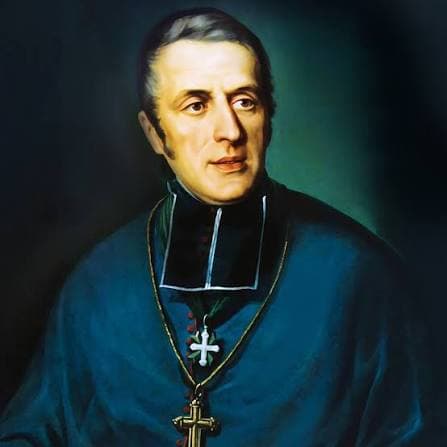
St. Eugene de Mazenod, 1782–1861
A restless aristocrat who chose the poor
Eugene de Mazenod was born into wealth in Aix-en-Provence in 1782, and then lost nearly all of it. The French Revolution sent his family fleeing across Italy for eleven years, moving from city to city, often poor, always unsettled. Those years shaped how he saw the world for the rest of his life.
Back in France in his twenties, adrift between the aristocratic life he was raised for and something he couldn't yet name, a conversion experience one Good Friday reoriented everything. He entered the seminary, was ordained in 1811, and made a decision that scandalized his own social class: instead of a comfortable Church career, he chose to preach to the poor of Aix. He preached in Provençal, their own everyday language, not the formal French reserved for polite society.
On January 25, 1816, he and a handful of companions began living and working together in Aix. That small, unofficial household of priests became, ten years later, a congregation approved by Rome under a name that's stuck ever since: the Missionary Oblates of Mary Immaculate.
“To be the servant and priest of the poor.”Eugene de Mazenod, on his ordination
Timeline
Tap any date to read more.
The Oblate charism
“Charism” is just the word for a religious family's particular flavor of following Christ. For the Oblates, that comes down to six things.
- Christ & Evangelization
- It starts with an experience of God's mercy, made real in Jesus Christ. Everything else follows from wanting other people to know it too.
- Love for the Poor
- A standing priority for “the most abandoned,” the people everyone else has stopped looking for.
- Community
- Oblates live and serve in community. You become more of who you're meant to be alongside others chasing the same thing.
- Missionary Vocation
- “Specialists in the difficult missions of the Church.” They go where the need is greatest.
- Total Availability
- “Oblate” means offered. The name itself is the point: given over, without the usual reservations people build in.
- Marian Devotion
- Mary Immaculate as model and companion. The founder called her, simply, the Mother of the Mission.
Oblate Youth, worldwide
Eugene started a youth congregation in Aix in 1813, three years before the Oblates officially existed, and personally mentored young people at the mission house from 1816 on. That same instinct carries on today in youth groups tied into local Oblate parishes and missions across dozens of countries, much like this one.
The framework Oblates use for youth ministry is short. It's attributed to Eugene himself: help each other become, in order, human, Christian, and saints. A sequence: dignity and growth first, then a real encounter with Christ, then a life actually built around it.
Every few years, millions of young Catholics, Oblate youth among them, gather for World Youth Day. One of them was held right here in Toronto, in 2002. The next one is already on the calendar: Seoul, 2027.
World Youth Day, over the years
- Rome 2000
- Toronto 2002 (our city)
- Cologne 2005
- Sydney 2008
- Madrid 2011
- Rio de Janeiro 2013
- Kraków 2016
- Panama City 2019
- Lisbon 2023
Which Oblate trait is most you?
Five quick questions, zero theology degree required.
Question 1 of 5
A friend texts at 11pm clearly having a rough week. You:
Want to be part of it here?
Come to a meeting and see for yourself. This group is the Toronto branch of that same two-hundred-year family the Oblates started in 1816.